

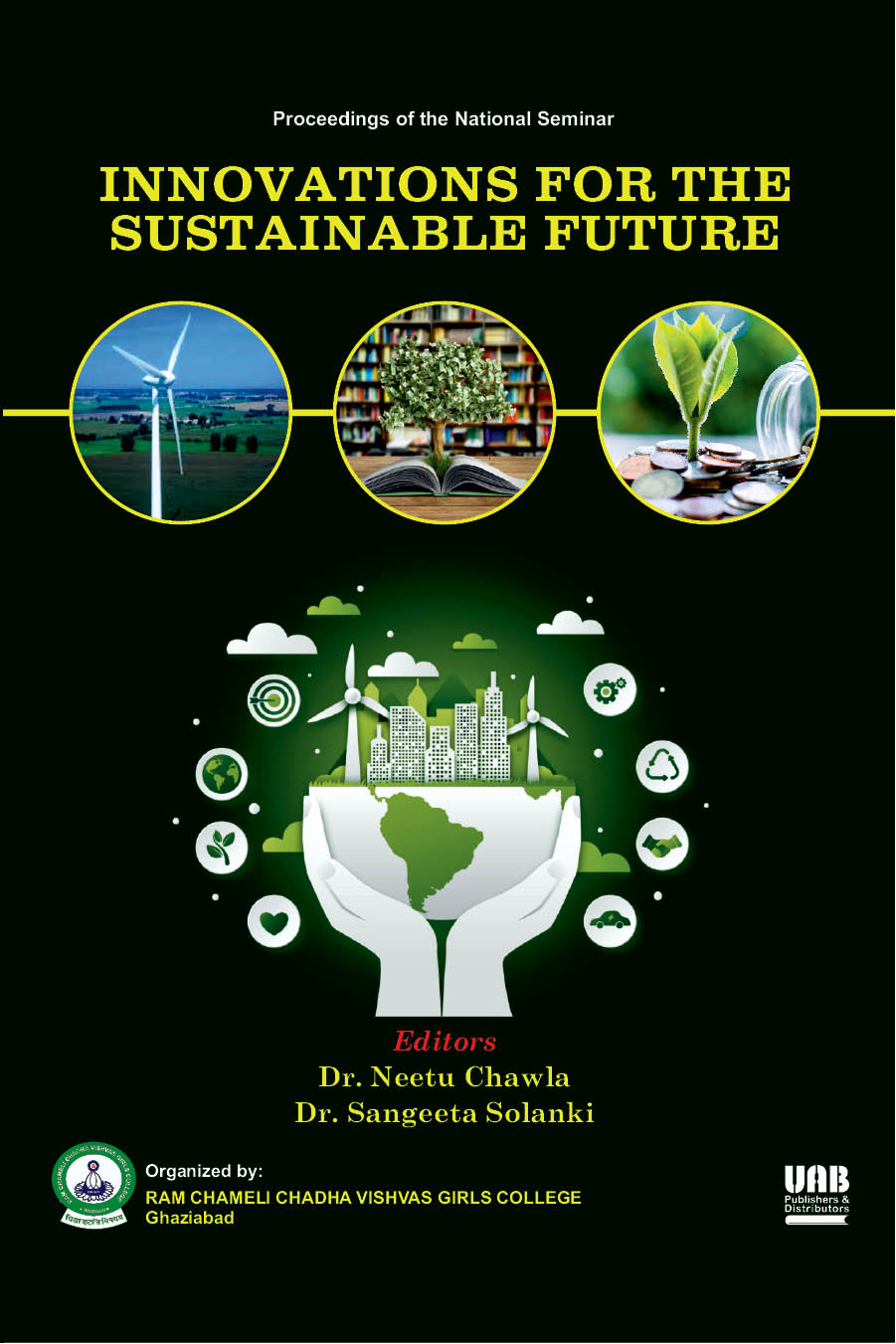
Sensor-Based Waste Segregation and Urban Fauna: Ecological Effects on Stray and Scavenger Species by Dr. Garima Bhatnagar and Kashish
Chapter – 23: Sensor-Based Waste Segregation and Urban Fauna: Ecological Effects on Stray and Scavenger Species
Book Title: Innovations for the Sustainable Future: A Multidisciplinary Approach
DOWNLOAD
Description
Innovations for the Sustainable Future
Editors: Dr. Neetu Chawla and Dr. Sangeeta Solanki
Published by Universal Academic Books Publishers & Distributors,
New Delhi (India), ISBN: 978-81-994586-4-2, 2026
Chapter 23
Sensor-Based Waste Segregation and Urban Fauna: Ecological Effects on Stray and Scavenger Species
Dr. Garima Bhatnagar1 and Kashish2
1Assistant Professor and 2M.Sc. III Sem, Department of Zoology, Ram Chameli Chadha Vishvas Girls College, Ghazibad, Ghaziabad (U.P.)
Abstract
Urban centres are rapidly adopting smart-city technologies to meet rising demands for sanitation, resource efficiency, and climate resilience. Among these innovations, sensor-based waste segregation and automated recycling systems are transforming the way solid waste is collected and processed. While these technologies reduce landfill loads and human exposure to waste, their ecological impact on urban fauna remains poorly documented. Stray dogs, house crows, pigeons, rodents, and other scavenger species have long depended on open refuse as a primary food source, shaping urban food webs and zoonotic disease dynamics. Changes in waste availability may therefore alter their population densities, movement patterns, and trophic interactions, with cascading effects on urban biodiversity.
This paper synthesizes global literature, municipal records, and citizen-science datasets to evaluate how sensor-enabled bins, sealed collection vehicles, and high efficiency recycling facilities influence the behaviour and abundance of key scavenger taxa. The review highlights emerging evidence of declining populations of opportunistic feeders, shifts towards more natural foraging habitats, and potential realignments of predator-prey relationships in urban food webs, It also explores indirect impacts, such s modified seed dispersal and insect-control services once provided by these animals.
The findings emphasise that while smart-waste technologies bring undeniable public-health and environmental benefits, urban planning must incorporate biodiversity considerations to prevent unintended ecological imbalances and to maintain essential ecosystem services within rapidly modernising cities.
Keywords: Scavenger species, Sensor-based waste segregation, Stray animals, Urban fauna.
1. INTRODUCTION
Urbanization is one of the most transformative processes affecting the natural environment in the twenty-first century. According to the United Nations, more than two-thirds of the global population is projected to reside in urban areas by 2050, leading to unprecedented levels of municipal solid waste generation (United Nations Department of Economic and Social Affairs [UN DESA], 2019). Cities are no longer merely human settlements; they are complex socio-ecological systems where technological infrastructure, human behaviour, and non-human organisms interact continuously.
Additional information
| Book Title | Innovations for the Sustainable Future: A Multidisciplinary Approach |
|---|---|
| Chapter | Chapter – 23: Sensor-Based Waste Segregation and Urban Fauna: Ecological Effects on Stray and Scavenger Species |
| Page Nos. | 190-200 |
| DOI | 10.66788/9788199458642/23 |
You may also like…
-
- Sale!
Innovations for the Sustainable Future: A Multidisciplinary Approach by Neetu Chawla and Sangeeta Solanki
- Price range: ₹1,990 through ₹2,650
- Select options This product has multiple variants. The options may be chosen on the product page
Reviews
There are no reviews yet.