

Behind the Renaissance: Nineteenth-Century Bengal and the Rise of Women’s Progress and Empowerment
₹500
Chapter 1: Behind the Renaissance – Nineteenth-Century Bengal and the Rise of Women’s Progress and Empowerment
Author: Dr. Birajlakshmi Ghosh
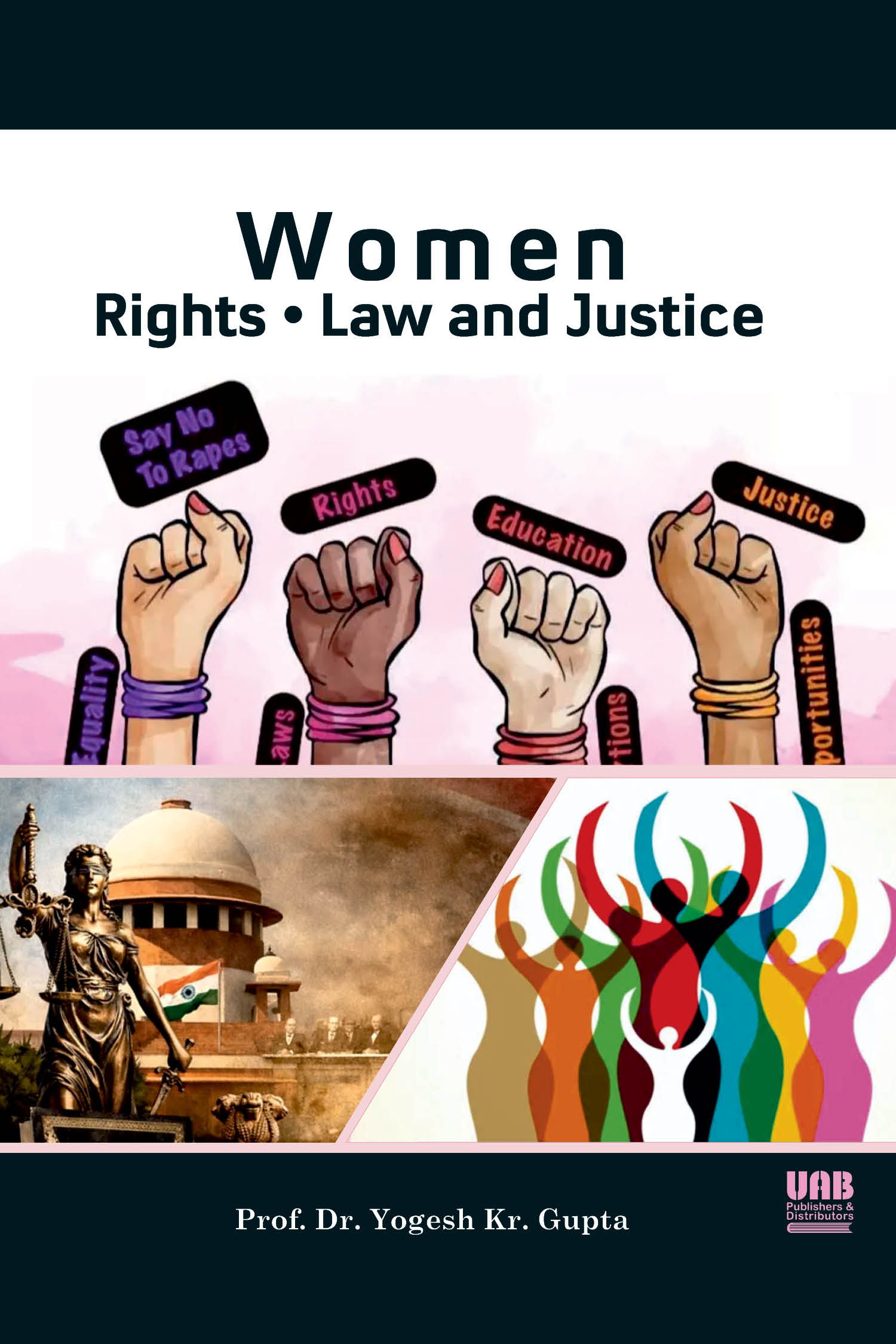
Book Title: Women Rights, Laws and Justice
Description
Women Rights, Law and Justice
Editor: Prof. Dr. Yogesh Kumar Gupta
Published by Universal Academic Books Publishers and Distributors,
New Delhi (India)
ISBN: 978-81-686113-2-0, 2026
Chapter 2
Behind the Renaissance: Nineteenth-Century Bengal and the Rise of Women’s Progress and Empowerment
Dr. Birajlakshmi Ghosh
Principal, George College, Department of Education, Kolkata, W.B
Abstract
The nineteenth century is a landmark chapter in the history of a thousand years of evolution of Bengali literature. This period was not only the dawn of modern prose or poetry, but it was also the beginning of a silent revolution to take the pen of the Bengali women imprisoned in the darkness of the inner circle and establish their identity. A group of brilliant women entered the field of literature by breaking through the long-held superstition in which women’s education was synonymous with being a ‘widow’. This paper examines the struggles, literary contributions of nineteenth-century women writers, and their historical role in women’s empowerment.
Studies show that the state of women’s education at the beginning of the nineteenth century was very poor. However, the introduction of periodicals like ‘Bamabodhini Patrika’ and ‘Antapur Shiksha’ and J. E. D. The institutional schools established by the sincere efforts of Mr. Bethune opened a new world in front of women. In particular, the emergence of a talented writer like Swarnakumari Devi turned the Bengali novel around. Her novel ‘Deepnirban’ is a shining example of successful literature written by women. Later, from the inner palace of Thakurbari to great women like Begum Rokeya and Sufia Kamal, not only created literature but also raised strong demands for social reform and women’s rights.
The discussion highlighted how the patriarchal society and the so-called critics have devalued women’s literature. The work of many influential women writers has not yet been properly evaluated or documented, which is a great shame for the modern literary society. Yet, the seeds sown by the women of the time through their writings paved the way for later writers like Ashapurna Devi or Mahasweta Devi. This paper proves that women writers of the nineteenth century acted not only as personal passions but also as the main carriers of the liberation and empowerment of an oppressed nation. Today’s independent and conscious women’s society has been built on the foundation of their indomitable struggle.
Keywords
Women’s Literature, Nineteenth Century, Swarnakumari Devi, Bamabodhini Patrika, Women’s Empowerment, Internal Education, Social Disabilities.
1. Introduction
The long journey of Bengali literature is more than a thousand years old. In the nineteenth century, the language that evolved from Magadhi-Apabhramsha and evolved through Charyapada, Vaishnava Padavali, Mangalkavya and translation literature took on a unique modern form. This century is marked as the era of ‘Renaissance’ or Renaissance in the history of Bengal. At the time when Bengali literature was taking its place in the world court with the gift of world-renowned luminaries like Raja Ram Mohan Roy, Ishwar Chandra Vidyasagar, Bankim Chandra Chattopadhyay and Rabindranath Tagore, a silent but powerful revolution was taking place behind the scenes. The women of Bengal were the architects of that revolution.
Additional information
| Book Title | Women Rights, Laws and Justice |
|---|---|
| Chapter | Chapter 2: Behind the Renaissance – Nineteenth-Century Bengal and the Rise of Women’s Progress and Empowerment by Dr. Birajlakshmi Ghosh |
| Page Nos. | 11-19 |
| DOI | 10.66788/9788168611320/2 |
Related products
-

-
Sale!
Essentials of Management information Systems
- Original price was: ₹4,339.₹3,471Current price is: ₹3,471.
- Add to cart
-
Sale!
-
-
Sale!
Biology of Bacilli
- Original price was: ₹7,799.₹6,239Current price is: ₹6,239.
- Add to cart
-
Sale!
-
-
Sale!
European Economic Integration
- Original price was: ₹13,872.₹11,098Current price is: ₹11,098.
- Add to cart
-
Sale!
Reviews
There are no reviews yet.