


Women in the Teaching Profession: Gender Equality, Workplace Discrimination, Rights and Socio-Legal Challenges
₹500
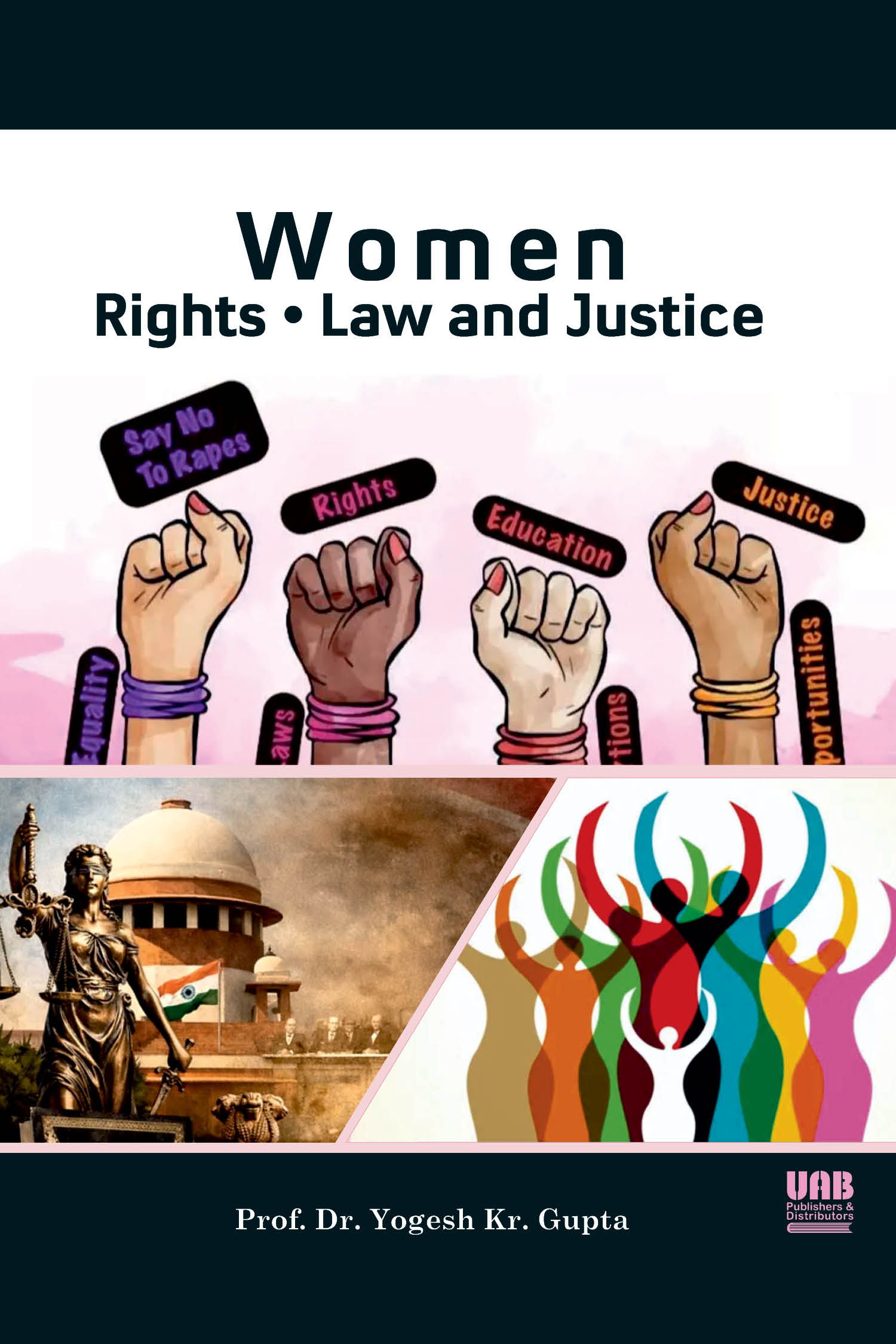
Book Title: Women Rights, Laws and Justice
Chapter 37: Women in the Teaching Profession: Gender Equality, Workplace Discrimination, Rights and Socio-Legal Challengess
Author: Arti Gupta
Description
Women Rights, Law and Justice
Editor: Prof. Dr. Yogesh Kumar Gupta
Published by Universal Academic Books Publishers and Distributors,
New Delhi (India)
ISBN: 978-81-686113-2-0, 2026
Chapter 37
Women in the Teaching Profession: Gender Equality, Workplace Discrimination, Rights and Socio-Legal Challenges
Arti Gupta
TGT, Viaan International School, Preet Vihar, Delhi, India
Abstract
Teaching is among the most feminized professions in the world, yet its numerical dominance by women has not produced equality of status, pay, authority or protection. This chapter examines the position of women teachers through a socio-legal lens. It traces how teaching became “women’s work” and how that history still shapes pay, prestige and promotion. It then identifies the main forms of workplace discrimination: vertical segregation, pay and pension gaps, the motherhood penalty, sexual harassment, precarious contracts and restrictions on dress and conduct. The chapter reviews the international, regional and national legal frameworks that guarantee women teachers equality, including CEDAW, ILO Conventions 100, 111, 183 and 190, the 1966 ILO/UNESCO Recommendation on the Status of Teachers, and domestic provisions in India, the United Kingdom and the United States. It argues that the central problem is no longer the absence of law but an implementation gap: weak enforcement, limited access to remedies, institutional cultures that normalize inequity, and the exclusion of contract and informal teachers from protection. Using intersectionality as an analytical frame, it shows how caste, race, religion, disability, geography and conflict compound disadvantage. It concludes with institutional, legal and policy pathways toward substantive equality in the profession.
Keywords
Women teachers; Gender equality; Workplace discrimination; Maternity protection; Sexual harassment; Intersectionality; Education law
1. Introduction
Walk into almost any early-years classroom in the world and the teacher is likely to be a woman. UNESCO’s global figures show that women make up roughly nine in ten pre-primary teachers and about two-thirds of primary teachers. Their share falls to a little over half in secondary education and to well below half in tertiary education. The profession is feminized at its base and masculinized at its top, and the pattern holds across very different economies and legal systems.
This pattern raises a paradox. Teaching is often presented as a “safe” and “family-friendly” career for women, and in many societies it has offered respectable paid work and a route to economic independence. It has also been a site of unequal pay, blocked advancement, harassment, insecure employment and social control over women’s bodies, dress and behavior. The assumption that teaching suits women’s “natural” nurturing qualities has served both as an opening and as a ceiling.
Additional information
| Book Title | Women Rights, Laws and Justice |
|---|---|
| Chapter | Chapter 37: Women in the Teaching Profession: Gender Equality, Workplace Discrimination, Rights and Socio-Legal Challenges by Arti Gupta |
| Page Nos. | 318-326 |
| DOI | 10.66788/9788168611320/37 |
Related products
-

-
Sale!
Advances in Marine Biology
- Original price was: ₹19,941.₹15,953Current price is: ₹15,953.
- Add to cart
-
Sale!
-
-
Sale!
Child Development
- Original price was: ₹2,604.₹2,083Current price is: ₹2,083.
- Add to cart
-
Sale!
-
-
Sale!
Dairy Modernization
- Original price was: ₹10,672.₹8,538Current price is: ₹8,538.
- Add to cart
-
Sale!
Reviews
There are no reviews yet.