

Human Trafficking: Assessing Gaps in the Implementation of Anti-Trafficking Laws and Polices in India
₹500
Chapter 22: Human Trafficking: Assessing Gaps in the Implementation of Anti-Trafficking Laws and Polices in India
Author: Dr. Priyanka Diphusha
Book Title: Women Rights, Laws and Justice
Description
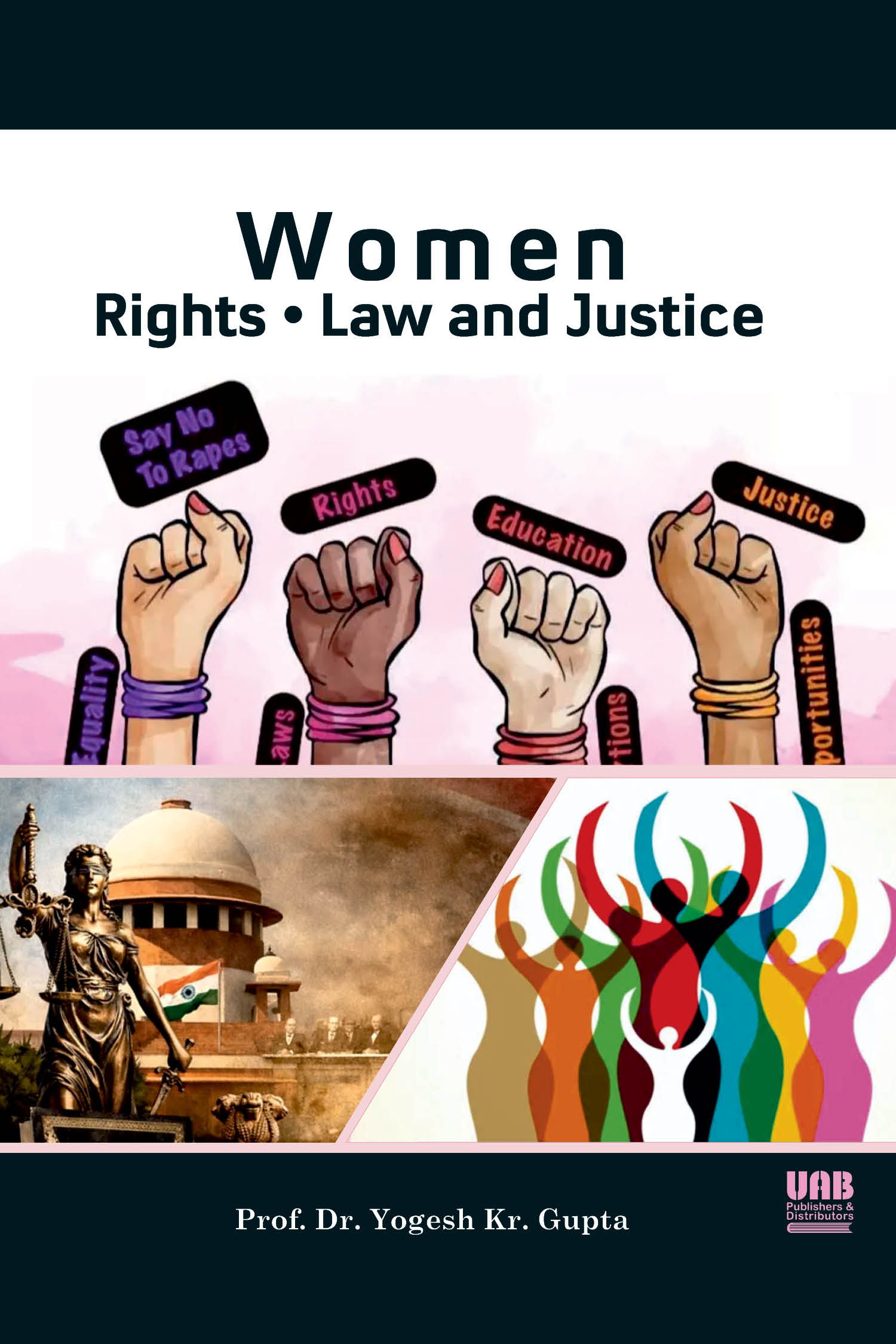
Women Rights, Law and Justice
Editor: Prof. Dr. Yogesh Kumar Gupta
Published by Universal Academic Books Publishers and Distributors,
New Delhi (India)
ISBN: 978-81-686113-2-0, 2026
Chapter 22
Human Trafficking: Assessing Gaps in the Implementation of Anti-Trafficking Laws and Policies in India
Dr. Priyanka Diphusha
Assistant Professor, The Assam Royal Global University
Abstract
Human trafficking is still a violation of human rights that needs coordinated legal and policy responses at both the national and international levels. This paper critically analyzes the deficiencies in the enforcement of anti-trafficking laws and policies in India, contextualizing the examination within constitutional requirements, international commitments, and national legal structures. India has enacted various legislative measures, including the “Immoral Traffic (Prevention) Act, 1956,” criminal laws and child protection laws. However, the current framework is fragmented and disproportionately emphasizes commercial sexual exploitation. The study shows that there is still a gap between the law’s intent and how it is carried out on the ground. This is due to poor coordination between institutions, enforcement agencies that don’t have enough resources, and victim rehabilitation systems that aren’t good enough. It further highlights the excessive focus on punitive measures to the detriment of prevention and protection. Drawing attention to systemic challenges such as socio-economic vulnerabilities, lack of victim-centric policies, and inconsistencies in compensation schemes, the paper advocates for a comprehensive, rights-based approach that integrates prevention, protection, and rehabilitation to effectively combat human trafficking in India.
Keywords
Human trafficking, Anti-trafficking laws, Implementation gaps, Criminal justice approach, Policy framework
1. Introduction
On 4th December 2000, the United Nations General Assembly adopted UN General Assembly Resolution 55/67 (United Nations General Assembly [UNGA], 2001) urging States to adopt coordinated measures to combat trafficking in women and girls. It emphasized a multidimensional approach, including strong legal frameworks, effective prosecution, victim protection, rehabilitation, and international cooperation grounded in human rights principles.
In line with these commitments, India has ratified key international and regional instruments. It is a signatory to the Palermo Protocol, which supplements the UN Convention against Transnational Organized Crime. By ratifying it in 2011, India accepted the “3Ps” framework—prevention, protection, and prosecution. India has also ratified the SAARC Convention on Preventing and Combating Trafficking in Women and Children for Prostitution, reinforcing regional cooperation in South Asia. (SAARC, 2002)
Additional information
| Book Title | Women Rights, Law and Justice |
|---|---|
| Chapter | Chapter 22: Human Trafficking: Assessing Gaps in the Implementation of Anti-Trafficking Laws and Polices in India by Dr. Priyanka Diphusha |
| Page Nos. | 180-188 |
| DOI | 10.66788/9788168611320/22 |
Related products
-

-
Sale!
Essentials of Management information Systems
- Original price was: ₹4,339.₹3,471Current price is: ₹3,471.
- Add to cart
-
Sale!
-
-
Sale!
Environmental Degradation of Industrial Composites
- Original price was: ₹31,646.₹25,316Current price is: ₹25,316.
- Add to cart
-
Sale!
-
-
Sale!
A Problem-Solving Approach to Aquatic Chemistry
- Original price was: ₹20,914.₹16,732Current price is: ₹16,732.
- Add to cart
-
Sale!
Reviews
There are no reviews yet.