

Deepfake Technology and Cyber Violence Against Women
₹500
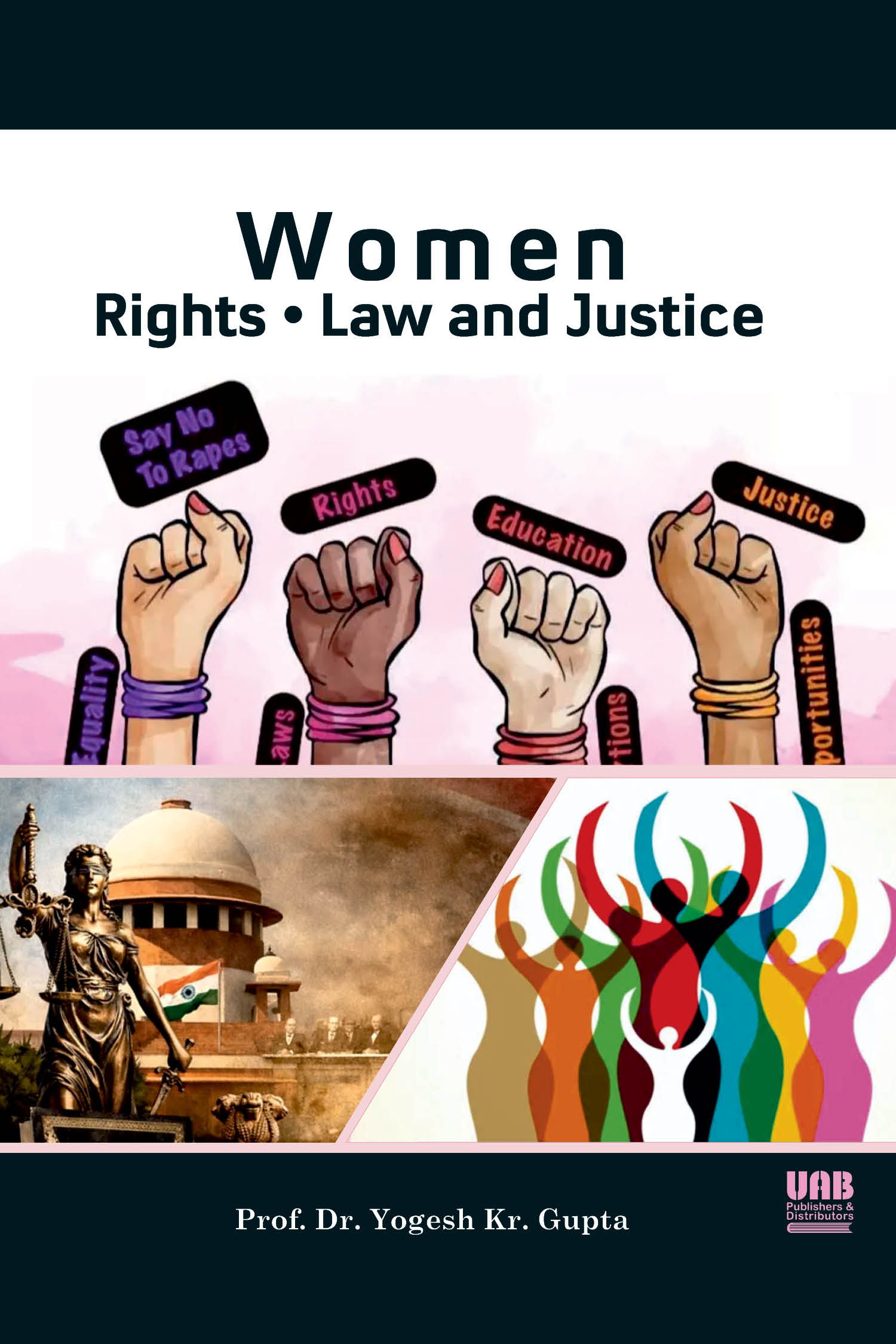
Book Title: Women Rights, Laws and Justice
Chapter 27: Deepfake Technology and Cyber Violence Against Women
Author: Asfar Ibrahim
Description
Women Rights, Law and Justice
Editor: Prof. Dr. Yogesh Kumar Gupta
Published by Universal Academic Books Publishers and Distributors,
New Delhi (India)
ISBN: 978-81-686113-2-0, 2026
Chapter 27
Deepfake Technology and Cyber Violence Against Women
Asfar Ibrahim J
LLM (Final year Student), Joy University, Vadakankulam, Tirunelveli, Tamil Nadu
Abstract
The rise of Artificial Intelligence (AI) has introduced novel technological solutions in the areas of digital communication, creation of content, healthcare, education, and business. Nevertheless, the fast growth of the AI technology has resulted in the development of new types of cybercrimes, which use the capabilities of the deepfake technology. Deepfakes involve the utilization of machine learning algorithms to create realistic images, videos, and audio files, which may portray people as doing things and saying things they did not do. Despite the fact that deepfakes have legitimate uses in entertainment, education, and accessibility, their misuse is a matter of great concern for privacy, dignity, and cybersecurity.
Women tend to be targeted more than other groups due to deepfakes being used to create non-consensual intimate images, impersonate identities, online harassment, cyberstalk, defamation, blackmail, and conduct fraudulent activities. The quick spread of deepfake-related content causes irreversible psychological, social, and reputational damage to victims. The emergence of deepfake technologies has shown the insufficiency of the current legal framework related to AI-based technologies.
The following legislation in India takes care of certain issues regarding deepfake crimes namely The Information Technology Act 2000, The Bharatiya Nyaya Sanhita 2023, The Digital Personal Data Protection Act 2023 and the Information Technology (Intermediary Guidelines and Digital Media Ethics Code) Rules 2021. However, the absence of legislation to regulate the issue of AI generated deepfakes is creating great difficulties in investigating, prosecuting and protecting the victims. This chapter analyses the concept of deepfake technology, discusses the role played by deepfake technology in committing cyber violence against women, analysis the current legal regime to assess whether it is adequate or not, highlights the problems in regulation and enforcement and proposes the necessary legal and policy reform.
Key Words
Deepfake Technology, Artificial Intelligence, Cyber Violence Against Women, Women’s Rights, Online Safety, Legal Reforms, India.
1. Introduction
The world of digital technology has been changed tremendously by Artificial Intelligence (AI) with respect to communication, healthcare, education, governance, business, and content creation. In addition to these advancements, AI has brought numerous cybersecurity issues in the form of deepfake technology. By utilizing deep learning algorithms, deepfakes produce images, videos, and audio files that appear very realistic compared to the genuine digital media content.
Additional information
| Book Title | Women Rights, Laws and Justice |
|---|---|
| Chapter | Chapter 27: Deepfake Technology and Cyber Violence Against Women by Asfar Ibrahim |
| Page Nos. | 224-233 |
| DOI | 10.66788/9788168611320/27 |
Related products
-

-
Sale!
Advanced Semiconductor and Organic Nano-techniques: Tunable bandgaps and nanotubes
- Original price was: ₹4,331.₹3,465Current price is: ₹3,465.
- Add to cart
-
Sale!
-
-
Sale!
Advances in Food and Nutrition Research
- Original price was: ₹17,774.₹14,219Current price is: ₹14,219.
- Add to cart
-
Sale!
-
-
Sale!
Chemical Technology in the Pre-Treatment Processes of Textiles
- Original price was: ₹27,311.₹21,848Current price is: ₹21,848.
- Add to cart
-
Sale!
Reviews
There are no reviews yet.