

The Role of Internalized Patriarchy and Religious Conditioning in Women’s Decision Making in Muslim and Christian Communities
₹500
Chapter 20: The Role of Internalized Patriarchy and Religious Conditioning in Women’s Decision Making in Muslim and Christian Communities
Author: Neha Roshni Yooshing
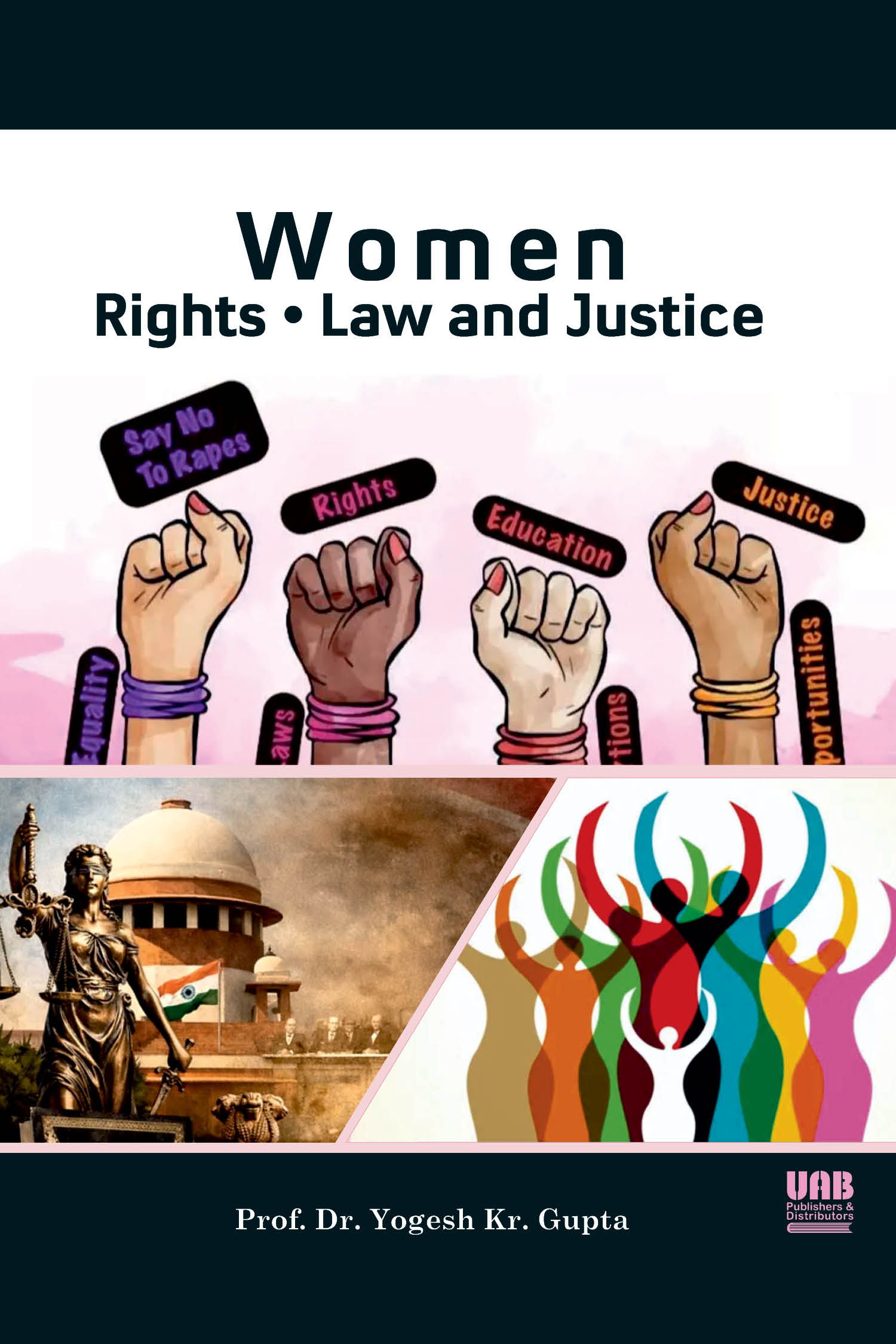
Book Title: Women Rights, Laws and Justice
Description
Women Rights, Law and Justice
Editor: Prof. Dr. Yogesh Kumar Gupta
Published by Universal Academic Books Publishers and Distributors,
New Delhi (India)
ISBN: 978-81-686113-2-0, 2026
Chapter 20
The Role of Internalized Patriarchy and Religious Conditioning in Women’s Decision Making in Muslim and Christian Communities
Neha Roshni Yooshing
Assistant Professor, Department of Psychology, Isabella Thoburn Degree College, University of Lucknow, Lucknow, Uttar Pradesh, India
Abstract
In India, women are legally entitled to equality, dignity, and access to justice. Yet, for many Christian and Muslim women, the journey from knowing their rights to actually using them is not always straightforward. This chapter explores how internalized patriarchy and religious conditioning quietly shape women’s decisions, often in ways that limit their ability to act in their own interest.
For instance, in many Muslim households, a woman may be aware of her legal right to seek maintenance or challenge an unfair divorce, yet hesitate due to fear of social backlash or a belief that endurance is virtuous. The well-known case of Shah Bano reflects not just a legal battle, but the larger tension between rights and community expectations. Similarly, among Christian women, legal provisions for divorce exist, but many continue to remain in unhappy or even abusive marriages due to pressure to preserve family unity and uphold religious ideals of sacrifice and commitment.
Through such examples, the chapter highlights that barriers to justice are not always visible or imposed from outside. They often exist within- through guilt, fear, and deeply learned ideas of what it means to be a “good woman.” The chapter argues that unless these internal barriers are addressed, legal rights alone cannot ensure true empowerment or access to justice.
Keywords
Psychosocial Barriers, Legal Consciousness, Internalized Patriarchy, Gender Socialization, Gender Justice
1. Introduction
On paper, India stands as a nation that guarantees women equality, freedom, and protection under the law. Rights such as equality before the law, freedom of choice, and protection against discrimination are clearly established. Courts have also delivered progressive judgments to strengthen these rights. Yet, beyond legal texts, a different reality appears. Many women, even when aware of their rights, hesitate to act on them. The issue is not always the absence of rights, but the reluctance or inability to claim them.
Additional information
| Book Title | Women Rights, Law and Justice |
|---|---|
| Chapter | Chapter 20: The Role of Internalized Patriarchy and Religious Conditioning in Women’s Decision Making in Muslim and Christian Communities by Neha Roshni Yooshing |
| Page Nos. | 164-172 |
| DOI | 10.66788/9788168611320/20 |
Related products
-

-
Sale!
Biogranulation Technologies for Wastewater Treatment
- Original price was: ₹22,109.₹17,687Current price is: ₹17,687.
- Add to cart
-
Sale!
-
-
Sale!
Biotechnology of Filamentous Fungi
- Original price was: ₹7,799.₹6,239Current price is: ₹6,239.
- Add to cart
-
Sale!
-
-
Sale!
Essentials of Management information Systems
- Original price was: ₹4,339.₹3,471Current price is: ₹3,471.
- Add to cart
-
Sale!
Reviews
There are no reviews yet.