

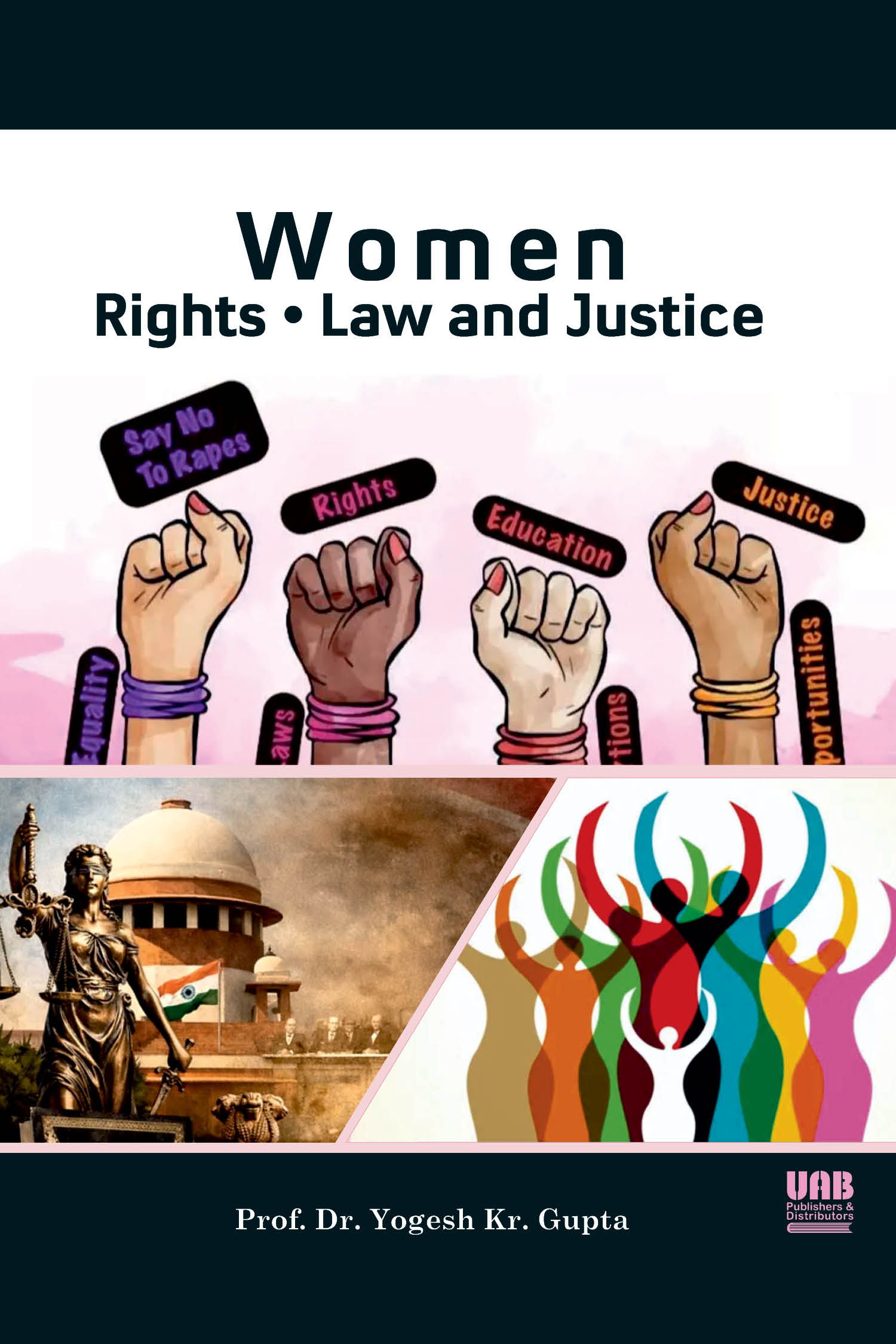
Dowry Prohibition Laws and Its Effectiveness
₹500
Chapter 6: Dowry Prohibition Laws and Its Effectiveness
Author: Dr. Shikha Bhatnagar
Book Title: Women Rights, Laws and Justice
Description
Women Rights, Law and Justice
Editor: Prof. Dr. Yogesh Kumar Gupta
Published by Universal Academic Books Publishers and Distributors,
New Delhi (India)
ISBN: 978-81-686113-2-0, 2026
Chapter 6
Dowry Prohibition Laws and Its Effectiveness
Dr. Shikha Bhatnagar
Assistant Professor, Teachers Law College, Bangalore
Abstract
In 1961, India enacted the Dowry Prohibition Act to eliminate the long-standing social evil of dowry. However, despite statutory prohibition, dowry-related offences continue to persist, revealing deep-rooted social, institutional, and economic challenges. This study critically examines the limited effectiveness of the Dowry Prohibition Act in addressing the complex realities of dowry harassment and violence. By analysing historical developments, the legal framework, and contemporary case trends, the paper explores key contributing factors such as gender inequality, social expectations, economic pressures, and weaknesses in institutional enforcement.
The persistence of offences relating to cruelty against married women under Section 498A of the Indian Penal Code and dowry deaths under Section 304B demonstrates that legal awareness and educational advancement alone have not substantially reduced the prevalence of dowry practices. The study further evaluates implementation challenges of the Act and examines recommendations made by the National Commission for Women in 2009, including the proposal to broaden the definition of dowry and to assign the responsibilities of Dowry Prohibition Officers to Protection Officers appointed under the Protection of Women from Domestic Violence Act, 2005. However, these proposed amendments faced resistance and remain under consideration.
This chapter concludes by emphasizing the need for a comprehensive and multi-dimensional approach involving legal reforms, institutional strengthening, community awareness initiatives, and effective victim support mechanisms to eliminate the practice of dowry and safeguard the dignity and rights of women in India.
Keywords
Dowry, Dowry Prohibition Act, Women’s Rights, Gender Inequality, Section 498A IPC, Section 304B IPC, Legal Reform, Victim Protection, Social Justice
1. Introduction
India’s Dowry Prohibition Act, enacted in 1961, was a significant step towards curbing the deep-rooted social evil of dowry. This practice, although outlawed, continues to persist, raising concerns about the efficacy of the Act in the face of evolving social dynamics. This study delves into a comprehensive analysis of the legal provisions and enforcement mechanisms outlined in the Dowry Prohibition Act, examining their alignment with changing social realities. It explores the Act’s effectiveness in addressing emerging challenges related to dowry and proposes enhancement strategies to ensure its relevance and impact in contemporary Indian society.
Additional information
| Book Title | Women Rights, Laws and Justice |
|---|---|
| Chapter | Chapter 6: Dowry Prohibition Laws and Its Effectiveness by Dr. Shikha Bhatnagar |
| Page Nos. | 46-56 |
| DOI | 10.66788/9788168611320/6 |
Related products
-

-
Sale!
Applied Biosensors
- Original price was: ₹7,799.₹6,239Current price is: ₹6,239.
- Add to cart
-
Sale!
-
-
Sale!
Biogranulation Technologies for Wastewater Treatment
- Original price was: ₹22,109.₹17,687Current price is: ₹17,687.
- Add to cart
-
Sale!
-
-
Sale!
Fiber Optic Data Communication
- Original price was: ₹22,109.₹17,687Current price is: ₹17,687.
- Add to cart
-
Sale!
Reviews
There are no reviews yet.